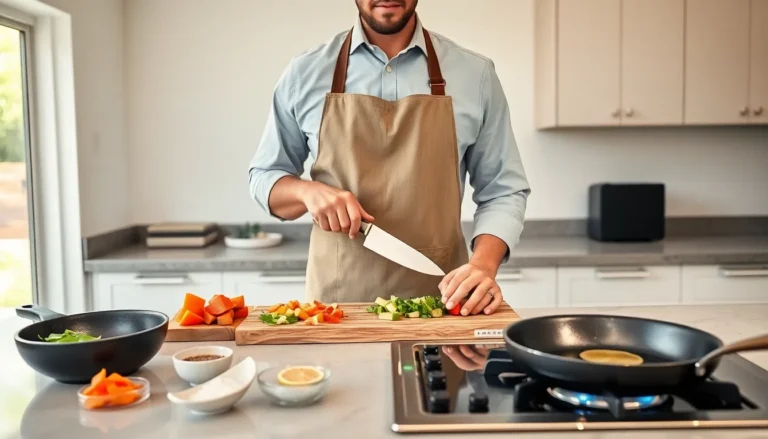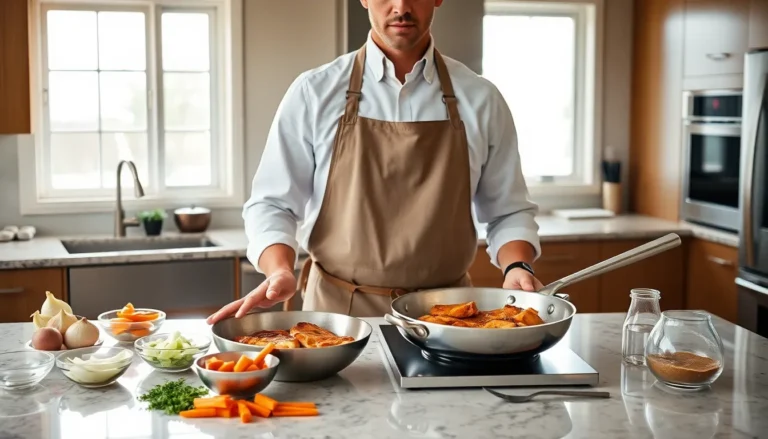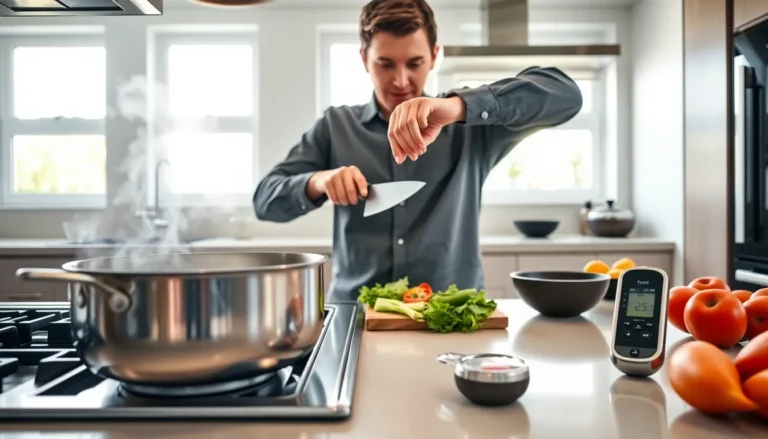
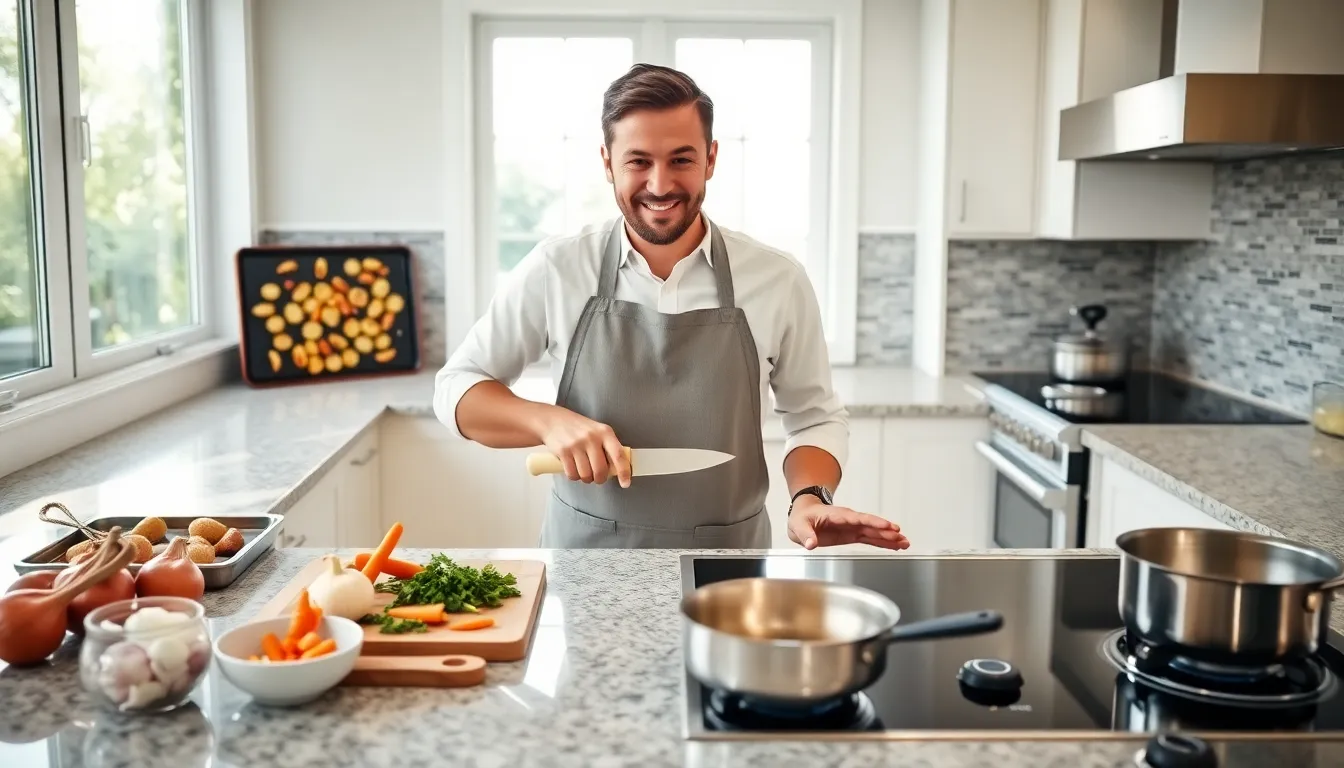
Cooking techniques for beginners can feel overwhelming at first. A hot pan, unfamiliar terms, and the fear of ruining dinner, it’s enough to make anyone reach for takeout. But here’s the truth: most home cooking relies on a handful of core methods. Master these, and you’ll handle 90% of recipes with ease.
This guide breaks down essential cooking techniques for beginners in plain terms. You’ll learn dry-heat methods like sautéing and roasting, moist-heat methods like simmering and steaming, and the knife skills that make prep work faster. By the end, you’ll have the foundation to cook confidently, and actually enjoy the process.
Table of Contents
ToggleKey Takeaways
- Mastering a handful of core cooking techniques for beginners—like sautéing, roasting, and simmering—lets you handle 90% of recipes with confidence.
- Dry-heat methods (sautéing, roasting) create browning and crispness, while moist-heat methods (simmering, steaming) work best for delicate foods and tough cuts.
- Always heat your pan before adding oil, and avoid overcrowding to ensure proper browning instead of steaming.
- Practice essential knife skills like dicing, mincing, and the “pinch grip” to make prep faster and safer.
- Focus on one cooking technique at a time and repeat dishes to build muscle memory faster than trying many new recipes.
- Taste and season in layers throughout cooking to develop rich, balanced flavors.
Why Learning Basic Cooking Techniques Matters
Recipes tell you what to do. Techniques teach you why it works.
When beginners understand cooking techniques, they stop blindly following instructions. They start making decisions. Should they turn up the heat? Add more liquid? Rest the meat longer? These choices become intuitive once the fundamentals click.
Learning basic cooking techniques also saves money. Home cooks who understand methods waste less food. They know how to revive wilted vegetables, repurpose leftovers, and avoid common mistakes that ruin ingredients.
There’s a confidence boost, too. Cooking techniques for beginners aren’t about perfection, they’re about building skills that compound over time. A person who learns to properly sauté vegetables today can make stir-fries, pasta sauces, and hash tomorrow. Each technique opens dozens of recipe possibilities.
Finally, understanding techniques makes cooking faster. Prep becomes efficient. Timing improves. The kitchen feels less chaotic and more controlled.
Dry-Heat Cooking Methods
Dry-heat cooking uses air, fat, or metal to transfer heat, no water or steam involved. These methods create browning, crispness, and deep flavor through the Maillard reaction (that delicious caramelization on seared steak or roasted vegetables).
Sautéing and Pan-Frying
Sautéing means cooking food quickly in a small amount of fat over medium-high heat. The word comes from the French “sauter,” meaning “to jump”, because you’re often tossing ingredients in the pan.
To sauté properly:
- Heat the pan first, then add oil
- Wait until the oil shimmers before adding food
- Don’t overcrowd the pan (moisture builds up and food steams instead of browning)
- Keep things moving with a spatula or by shaking the pan
Pan-frying uses more fat and slightly lower heat. It’s ideal for chicken cutlets, fish fillets, or anything with a breaded coating. The extra oil creates an even, crispy exterior.
Both methods rank among the most useful cooking techniques for beginners because they’re fast, versatile, and work with almost any protein or vegetable.
Roasting and Baking
Roasting and baking both use dry oven heat, but they differ slightly. Roasting typically refers to meats and vegetables cooked uncovered at higher temperatures (375°F–450°F). Baking usually means lower temperatures for breads, casseroles, and desserts.
For successful roasting:
- Preheat the oven fully before adding food
- Use a sheet pan or roasting dish that allows air circulation
- Cut vegetables into similar-sized pieces for even cooking
- Don’t skip the oil, it helps with browning and prevents sticking
Roasting transforms ordinary ingredients. Brussels sprouts turn sweet and nutty. Chicken thighs develop crispy skin. Carrots caramelize at the edges. It’s hands-off cooking at its best.
Moist-Heat Cooking Methods
Moist-heat cooking uses water or steam to transfer heat. These methods are gentler than dry-heat techniques and work well for delicate foods or tougher cuts that need time to break down.
Boiling, Simmering, and Steaming
Boiling means cooking in water at 212°F (at sea level). Big, rolling bubbles break the surface constantly. It’s best for pasta, potatoes, and blanching vegetables. Boiling works fast but can be harsh on delicate items like fish.
Simmering happens between 180°F and 205°F. Small bubbles rise gently from the bottom. Soups, stews, sauces, and braises all benefit from simmering. The lower temperature extracts flavor slowly without toughening proteins.
A common beginner mistake: cooking on “medium” and assuming it’s a simmer. Check the bubbles. If they’re aggressive, reduce the heat.
Steaming cooks food suspended above boiling water. The steam transfers heat without submerging the food, which preserves nutrients, color, and texture. Vegetables, fish, and dumplings all steam beautifully.
To steam without a steamer basket, use a metal colander set over a pot of boiling water. Cover with a lid to trap the steam.
These moist-heat cooking techniques for beginners form the backbone of everyday meals, from morning oatmeal to weeknight soups.
Knife Skills Every Beginner Should Practice
Good knife skills make cooking faster, safer, and more enjoyable. Poorly cut ingredients cook unevenly. Proper cuts ensure everything finishes at the same time.
Start with these essential cuts:
- Dice: Uniform cubes, usually 1/4 to 1/2 inch. Used for salsas, soups, and stir-fries.
- Julienne: Thin matchstick strips. Great for salads and garnishes.
- Mince: Very fine pieces, almost a paste. Standard for garlic and fresh herbs.
- Chiffonade: Ribbon-like strips made by rolling leafy greens and slicing thinly.
The grip matters as much as the cut. Hold the knife handle firmly with three fingers, with thumb and index finger pinching the blade just above the handle. This “pinch grip” gives control.
For the guiding hand, curl fingers under like a claw. Knuckles guide the blade while fingertips stay protected.
Practice on onions. They’re cheap, always available, and require multiple techniques (halving, slicing, dicing). An onion a day for two weeks builds real skill.
A sharp knife is safer than a dull one. Dull blades require more pressure and slip more easily. Sharpen knives regularly or have them professionally sharpened twice a year.
Tips for Improving Your Cooking Quickly
Learning cooking techniques for beginners doesn’t require culinary school. Consistent practice with smart habits produces results faster.
Read recipes completely before starting. This prevents surprises mid-cook. Gather ingredients, prep everything, and understand the sequence before turning on the stove.
Taste as you go. Professional chefs taste constantly. It’s the only way to adjust seasoning, acidity, and balance. Keep a tasting spoon nearby.
Master one technique at a time. Spend a week sautéing everything. The next week, focus on roasting. Depth beats breadth when building skills.
Learn from mistakes. Burned garlic teaches you about heat control. Overcooked pasta teaches timing. Every failure contains a lesson, don’t waste it.
Watch technique videos. Reading about knife skills helps, but seeing a chef’s hands in motion clarifies things instantly. YouTube offers endless free instruction.
Cook the same dish multiple times. Repetition builds muscle memory. Making the same stir-fry five times teaches more than making five different recipes once each.
Season in layers. Add salt at multiple stages, while sautéing onions, when adding liquids, and again before serving. Layered seasoning creates depth that last-minute salting can’t match.
Clean as you cook. A cluttered workspace slows everything down. Wash bowls between steps. Wipe counters. Organization speeds up cooking and reduces stress.